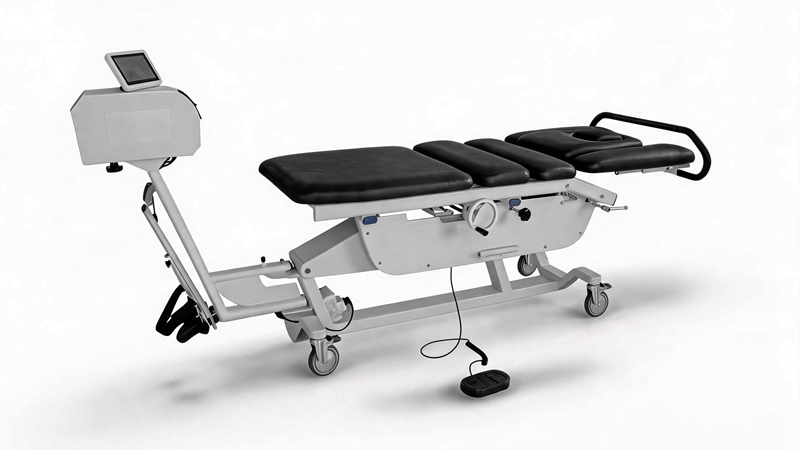
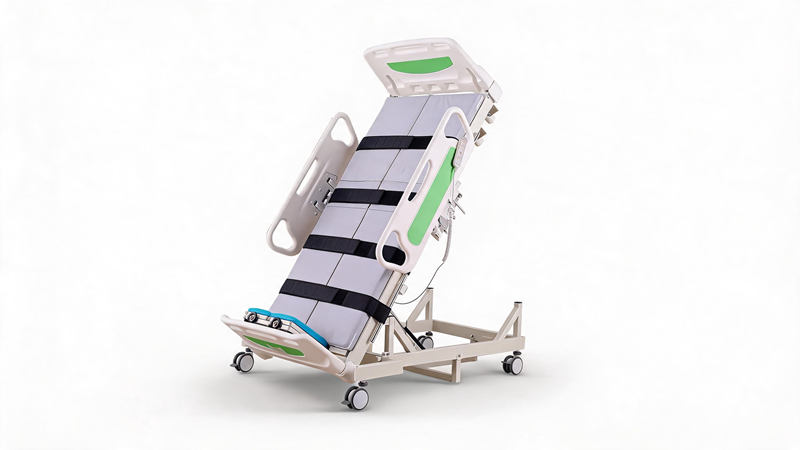
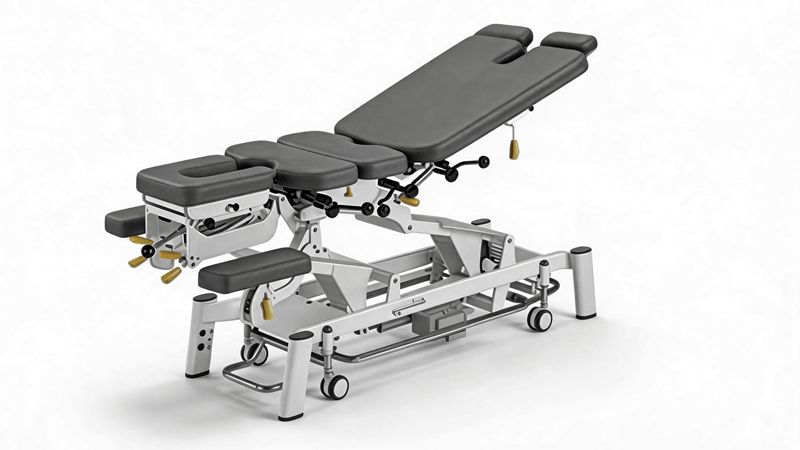
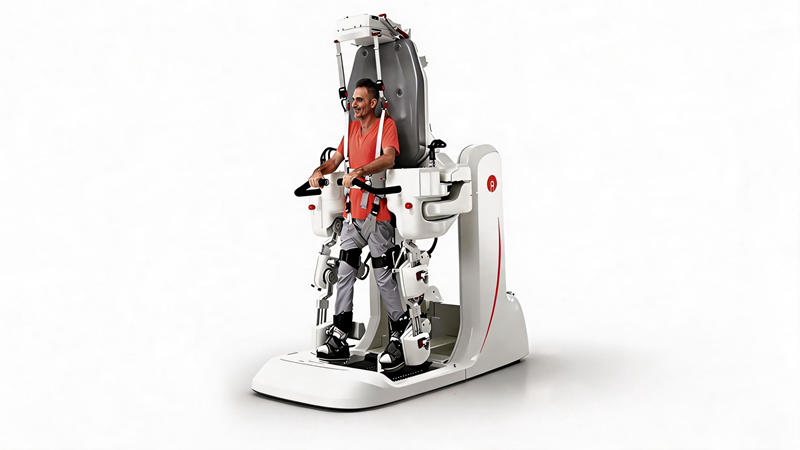
System configuration
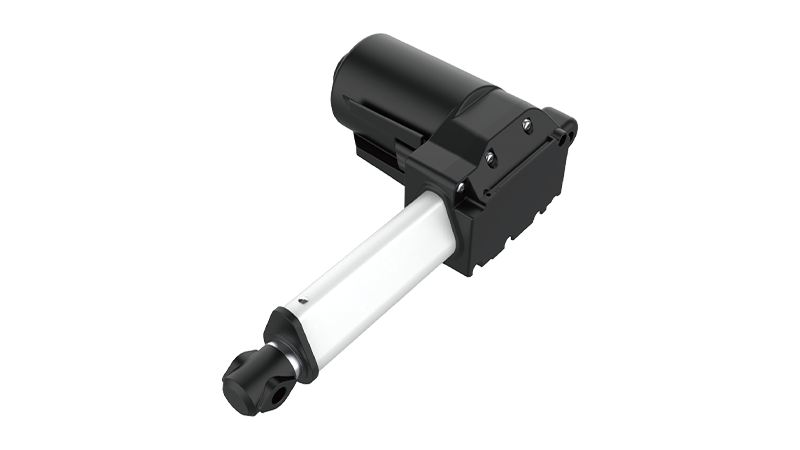
● Linear actuator (traction displacement drive)
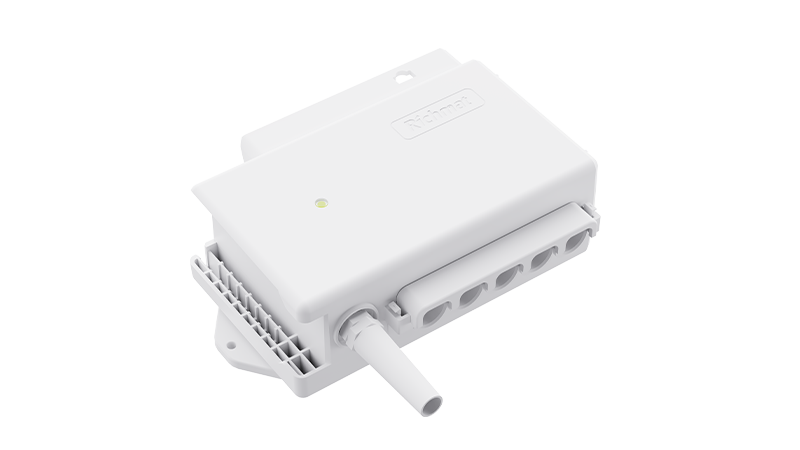
● Control box
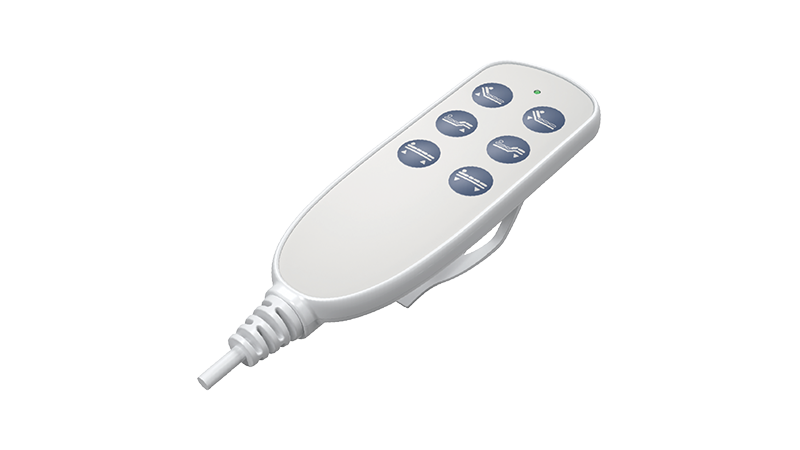
● Controls
Key features and benefits
Precise displacement control — enabling accurate measurement of traction force
The efficacy of traction therapy depends on the precision of the traction force. If the traction force is too low, it cannot effectively increase the intervertebral space or alleviate nerve compression; conversely, if the traction force is too high, it may cause soft tissue damage and exacerbate the patient's pain. Clinical treatment requires that traction force errors be kept within an extremely narrow range, which places extremely high demands on the displacement accuracy of the drive system.
Our linear actuators provide high-precision stroke control and exceptional repeatability—for every millimeter the actuator moves, the traction bed plate shifts correspondingly, and the traction force adjusts precisely.
Smooth and uniform motion ensures patient comfort during treatment
Traction therapy must be conducted under continuous, stable tensile conditions; any sudden change in traction force may trigger muscle tension and exacerbate the patient's pain. Our electric linear actuators provide uniform, jerk-free linear motion throughout the entire process—the gradual increase in traction force from zero to the target value is smooth and progressive, while the unloading process after treatment is equally gentle and controlled. During treatment, patients experience a continuous and stable sensation of traction, rather than sudden pulling stimuli.
Programmable control for personalized traction regimens
Traction therapy requirements vary between patients in terms of force, duration, and interval patterns. Our electric linear actuators support deep integration with the control system, allowing therapists to pre-set parameters such as traction force, duration, and interval cycles according to the patient's specific condition, thereby enabling the programming of fully personalized treatment regimens. The system automatically executes the pre-set traction curve, eliminating the need for the therapist to be present throughout the session.
Low-noise operation, creating a quiet treatment environment
Traction therapy typically lasts 15–30 minutes, during which patients need to remain in a relaxed state. Our electric linear actuators maintain an extremely low noise level during operation; the linear motion during traction is virtually silent, ensuring it does not disrupt the patient's state of relaxation and fostering a quiet, focused treatment atmosphere.
Built-in Hall sensors, enabling precise control for our customers
Our linear actuators are equipped with built-in Hall sensors, which provide real-time feedback on the actuator's stroke position and operational status via pulse signals. This enables the client's control system to precisely monitor real-time data on traction displacement and force, facilitating closed-loop control and traceable treatment records. The real-time feedback from the Hall sensors provides a reliable data foundation for the precise, digital management of traction therapy.
Richmat's engineers provide end-to-end technical support—from requirements analysis and solution design through to product delivery—safeguarding every moment of precise traction and pain relief with our reliable, medical-grade linear drive systems.