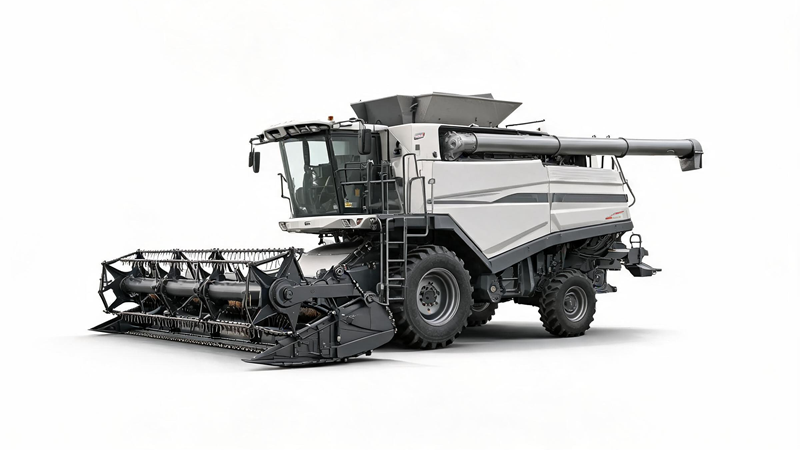
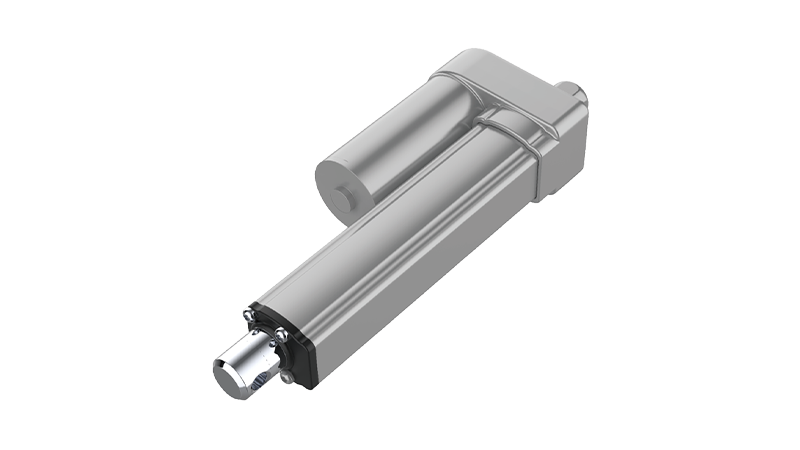
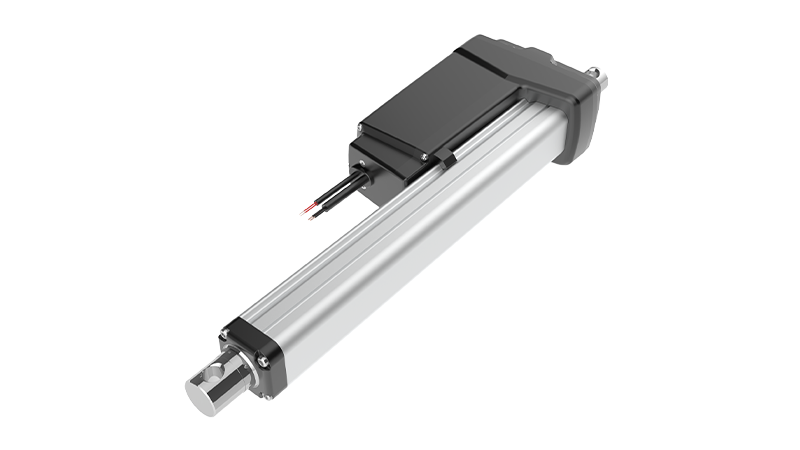
System configuration
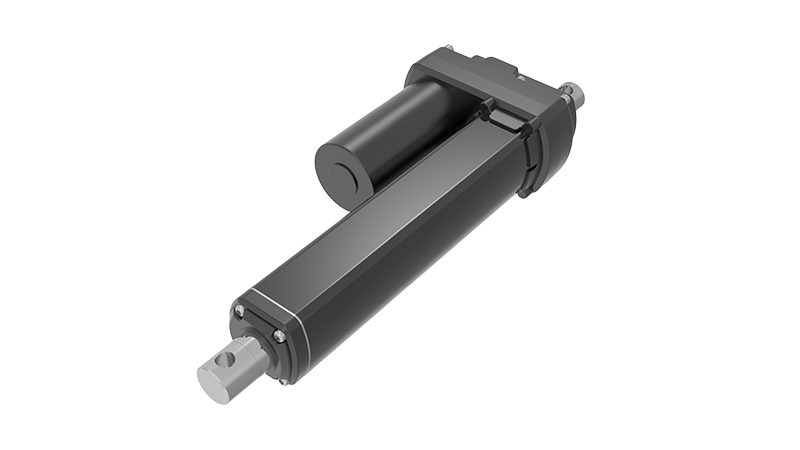
● Linear actuator
Key features and benefits
Precise control for improved harvest quality and yield
The various adjustments on a combine harvester directly impact harvest quality and crop yield—precise adjustment of the concave clearance determines threshing efficiency, the height and angle of the auger affect smooth crop conveyance, and the adjustment of the straw spreader determines the uniformity of straw coverage. Our linear actuators provide precise stroke control and extremely high repeatability, ensuring that every adjustment is executed with pinpoint accuracy. During corn harvesting, the operator must precisely adjust the width of the pick-up gap based on the size of the corn cobs.
High load capacity, effortlessly handling heavy-duty conditions
The various adjustment mechanisms in combine harvesters often operate under heavy-load conditions—the concave adjustment must withstand enormous threshing loads, while the auger adjustment must endure continuous impact from the crop. Our linear actuators provide ample thrust reserve (up to 15,000 N), effortlessly handling all types of heavy-load adjustment requirements.
Fast response, enhanced harvesting efficiency
The harvest season window is extremely short, and combine harvesters must complete the harvesting of large crop areas within a limited timeframe. Our linear actuators feature extremely high response speeds—rapid concave clearance adjustment, instant auger angle adjustment, and swift straw spreader response—ensuring the combine harvester completes all adjustments in the shortest possible time.
High protection rating, withstands harsh field conditions
During harvest season, combine harvesters face a variety of harsh operating conditions—rain and mud, dusty crops, and summer soil. Our electric linear actuators feature a high protection rating, providing full resistance against the intrusion of dust, mud, and moisture. All actuators undergo comprehensive testing before leaving the factory—including tests for collisions, impacts, vibrations, temperature fluctuations, humidity, dust, and even electromagnetic radiation—to ensure stable and reliable performance throughout the combine harvester's entire lifecycle.
Leak-free design eliminates the risk of hydraulic fluid contamination
Hydraulically driven combine harvesters face the risk of hydraulic fluid leaks—if a line ruptures, the fluid can contaminate farmland and crops. Our linear actuators utilize a purely electric solution with no hoses, pumps, or compressors. The leak-free design fundamentally eliminates the risk of hydraulic fluid contamination.
Maintenance-free design, reducing total cost of ownership
Combine harvesters operate continuously under high-intensity conditions during the harvest season; any downtime for maintenance results in significant time and financial losses. Our linear actuators feature a maintenance-free design, eliminating the need for regular lubrication or replacement of wear parts. Using electric actuators not only saves maintenance costs but also enables more precise control.
Smart feedback and remote control for enhanced operational safety
The integrated electronics in the electric actuators provide design engineers with detailed feedback and the ability to fine-tune the combine's automatic adjustment mechanisms. By incorporating this data into the overall control system, the operator can remotely control the actuators from the cab. This improves efficiency and significantly enhances safety. By providing feedback to the system, farmers can monitor, adjust, or preset functions from the cab, gaining a better understanding of the implement's position or current movement status.
Low-energy operation, optimized fuel consumption
Electric actuators consume little energy—especially in standby mode—which means vehicles can optimize fuel consumption and are generally more environmentally friendly. Electric actuators improve overall energy efficiency, with standby power consumption approaching zero. Combined with intelligent control systems, they can also reduce waste of grain, fertilizer, or straw, saving farmers money and protecting the environment.
Richmat's engineers provide end-to-end technical support—from needs assessment and solution design to product delivery—ensuring that our reliable linear drive systems safeguard every moment of your harvest and every bountiful yield.