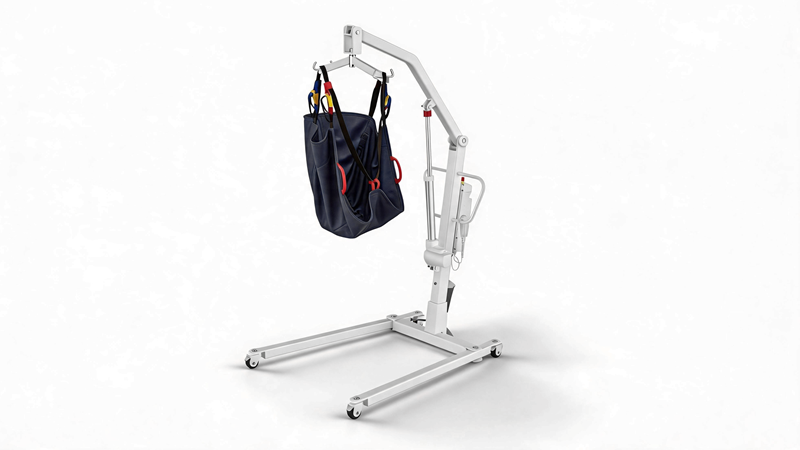
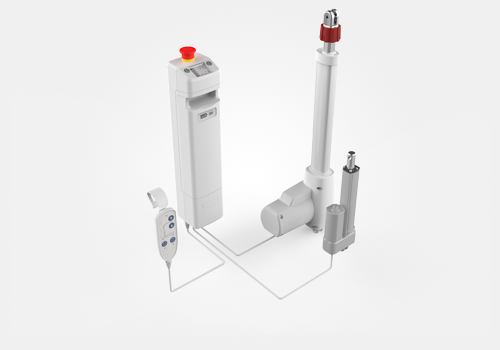
System configuration
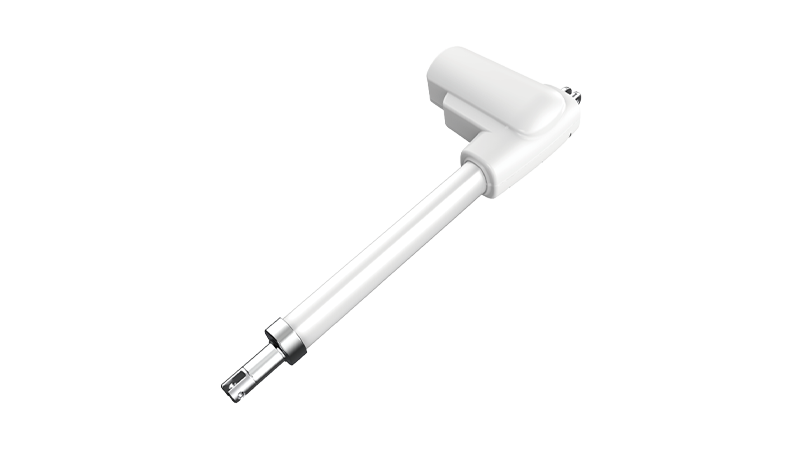
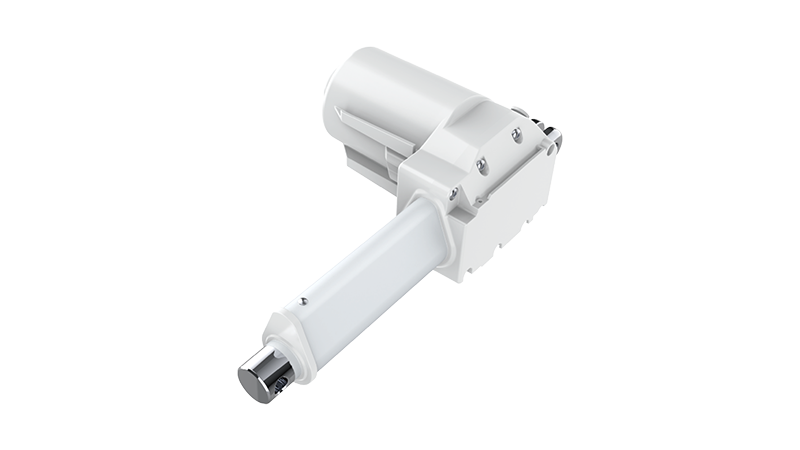
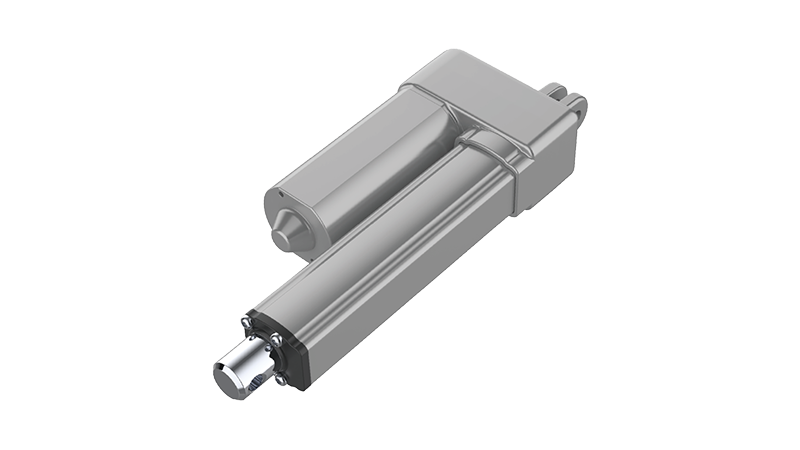
● Linear actuator (lifting drive, with built-in Hall sensor)
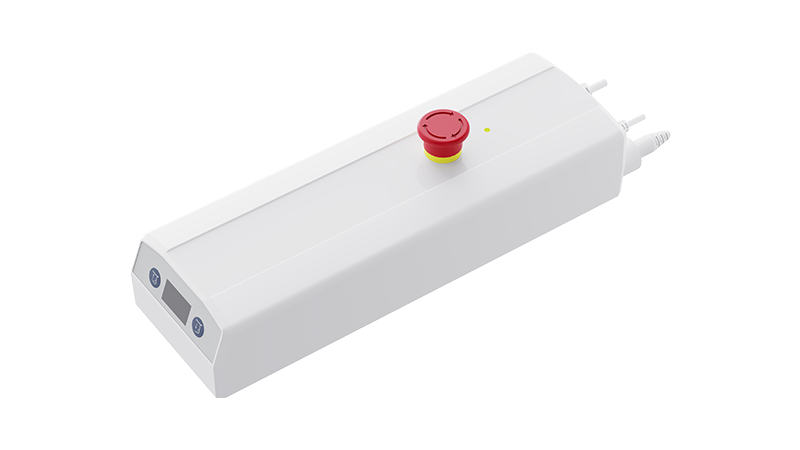
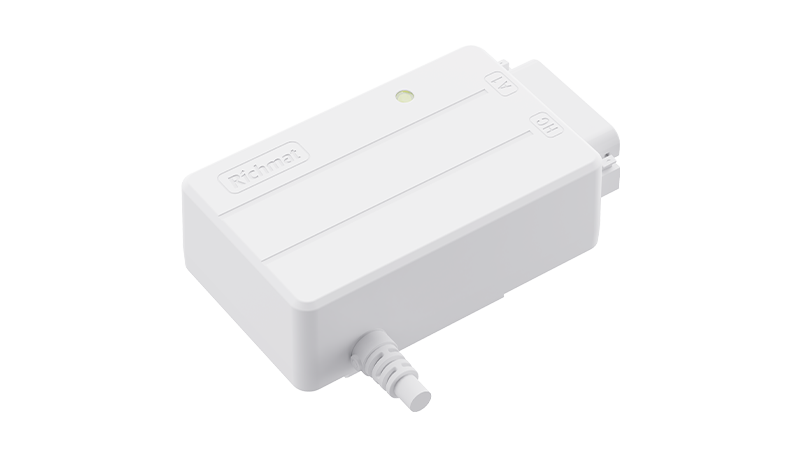
● Control box (optional)
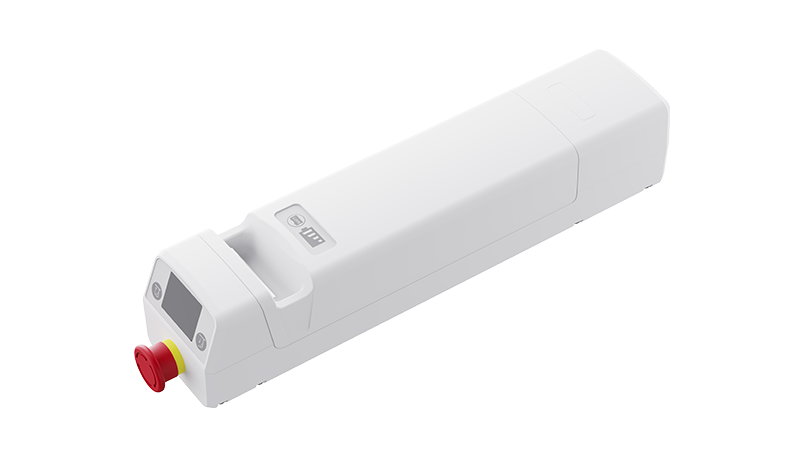
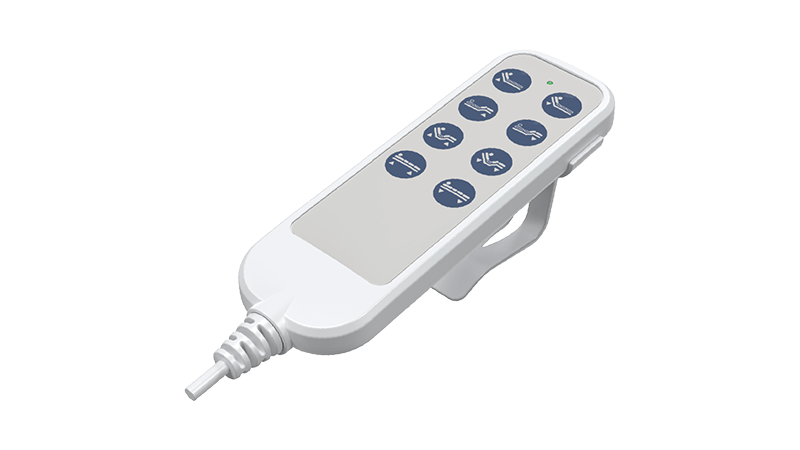
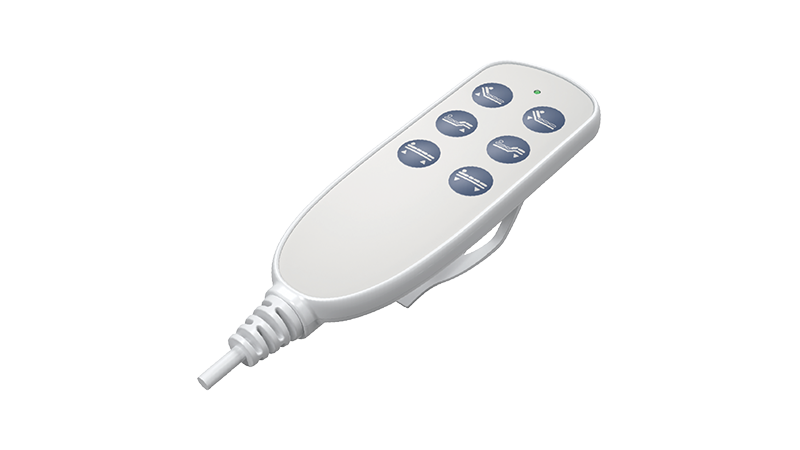
● Controls (optional)
Key features and benefits
High load capacity, effortlessly supporting the patient's weight
Patient lifts bear the patient's full body weight during transport, and the thrust requirements for the linear actuators are extremely high. Our medical linear actuators provide ample thrust reserve, reaching up to 10,000 N. Featuring a high-strength transmission structure, the actuators maintain smooth and steady lifting and lowering motion even under heavy loads, effortlessly meeting the transfer needs of patients of varying weights.
Smooth lifting and lowering to ensure patient comfort and safety
The lifting and lowering process of the patient lift directly impacts the patient's sense of security and comfort. Our electric actuators provide uniform, jerk-free linear motion throughout the entire range of motion—rising smoothly and slowly, and descending gently and controllably—ensuring that patients do not experience anxiety or pain due to sudden movements during transfer. The actuators deliver smooth, coordinated motion, keeping patients comfortable and safe at all times during the lifting and lowering process.
Zero-backlash transmission, eliminating shaking during lifting and lowering
The stability of patient lifts during elevation and lowering is directly linked to the patient's sense of security. Our electric linear actuators utilize a high-precision drive design that effectively eliminates mechanical play during load-bearing and direction-changing operations, ensuring the sling remains stable and wobble-free throughout the entire lifting cycle, including at start and stop points. This feature is particularly important for patients undergoing neurological rehabilitation or recovering from orthopedic surgery—as even the slightest wobble can trigger pain or discomfort.
Multiple safety protections safeguard every transfer
Patient transfer involves significant changes in body position, making safety the top priority. Our medical actuators are developed and designed based on a safety factor of 2, ensuring stable operation even under unexpected loads or operating conditions. The products strictly comply with international safety standards for medical electrical equipment, such as IEC 60601-1 and IEC 60601-1-2.
● Manual lowering mechanism in the event of a power cut: in the event of a sudden power cut, the patient can be safely lowered using a manual mechanism
● Soft start and stop function: speed transitions smoothly at start and stop, avoiding inertial impact
● Overload protection: automatically stops during overload operation to protect both the equipment and the patient
● Optional "push-only, no pull" function: prevents the actuator from being subjected to reverse forces under specific operating conditions
Silent operation, creating a quiet care environment
Hospital wards, care homes, and home care settings have strict noise control requirements. Our electric linear actuators maintain low noise levels even when operating at full load. Whether during routine transfers by day or nighttime care procedures, lifting and lowering movements are virtually silent, ensuring they do not disturb other patients' rest and recovery.
Compact design, suited to the limited space of patient lifts
Patient lifts require the integration of multiple systems—including actuators, slings, control boxes, and batteries—within a compact chassis. Our linear actuators are known for their compact design; with small internal dimensions and a short installation length, they fit perfectly into the limited space within the lift's base. This compact structure affords greater freedom in the industrial design of the lift.
Long service life and maintenance-free operation, ensuring reliability during intensive care operations
Patient lifts are often required to operate continuously, multiple times a day, all year round. Our electric linear actuators feature a maintenance-free design, requiring no regular lubrication or replacement of wear parts. Validated through tens of thousands of endurance tests, they ensure stable operation throughout the equipment's entire lifecycle, minimizing maintenance requirements.
Built-in Hall sensors, enabling precise control for customers
Our actuators are equipped with built-in Hall sensors, which provide real-time feedback on the actuator's stroke position and operational status via pulse signals. This enables the customer's control system to precisely monitor the real-time height of the lifting frame, achieving accurate closed-loop control. The real-time feedback from the Hall sensors provides a reliable positional reference for the precise control of every transfer.
Low-power operation, suitable for battery-powered applications
Patient lifts are often battery-powered to enable wireless operation, which imposes strict requirements on energy consumption. Our electric linear actuators consume power only during the instantaneous lifting and lowering movements, while power consumption in standby mode is extremely low. This effectively extends the number of operations per charge and enhances the equipment's continuous operational capability.
Richmat's engineers provide end-to-end technical support—from needs assessment and solution design through to product delivery—safeguarding every safe transfer and every moment of dignified care with our reliable, medical-grade linear drive systems.