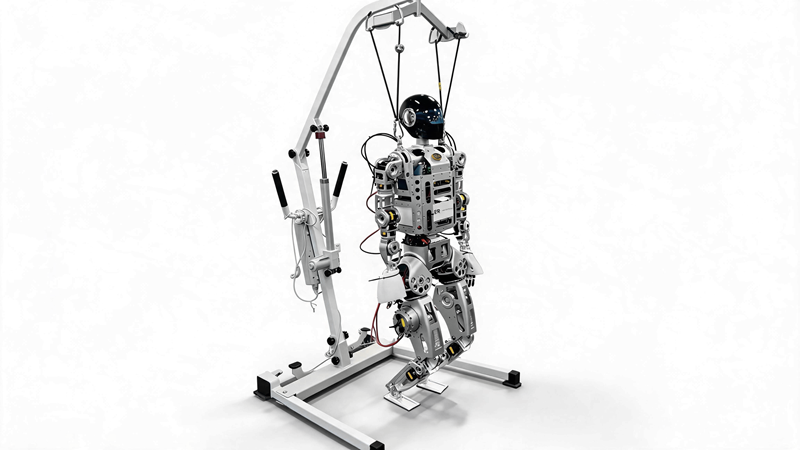
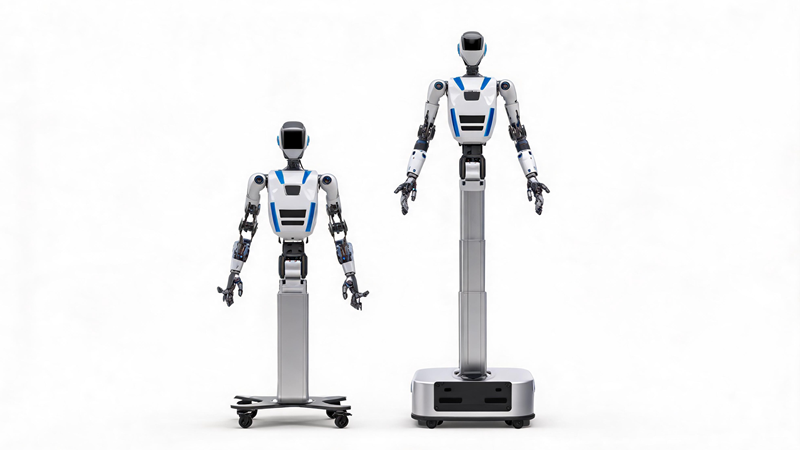
System configuration
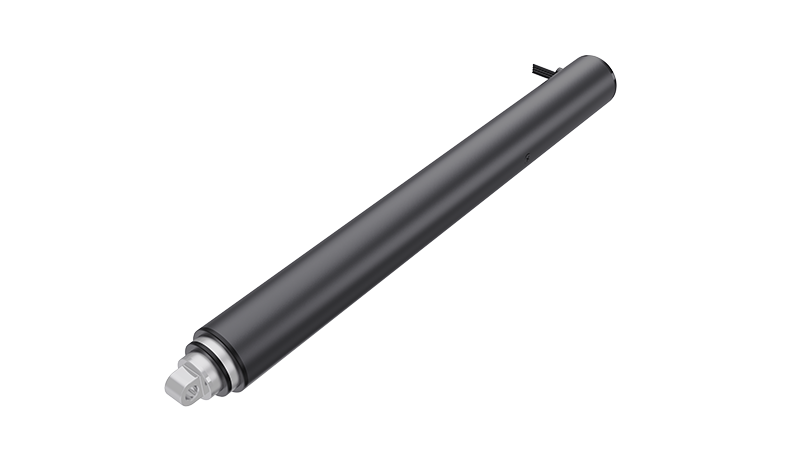
● Miniature linear actuator
Key features and benefits
Precise stroke control enables stepless adjustment of the head's angle
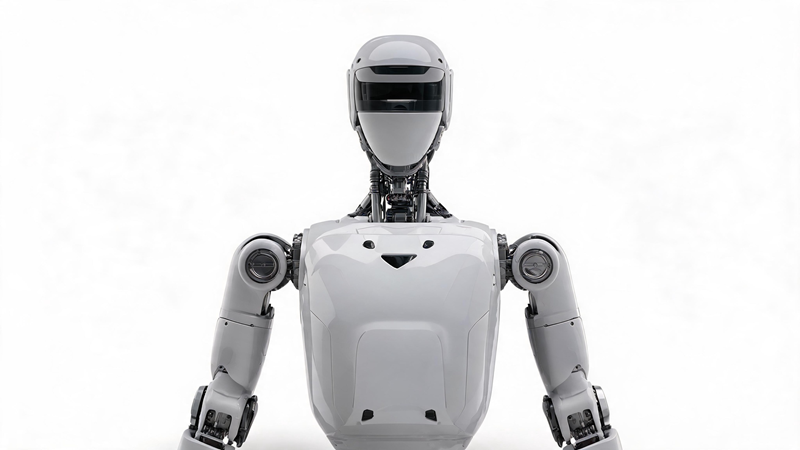
The pitch and rotation of the robot head require precise stroke control—even the slightest change in the actuator's extension distance corresponds to a precise deflection in the head's angle. Our miniature electric linear actuators offer extremely high repeatability and stepless adjustment capabilities, ensuring the head can be precisely positioned at any angle. Whether it's a slight 15° nod up or down or a significant 45° pitch, every movement is precise and on target, giving the robot smooth and natural head movements.
Ultra-compact design, engineered for the confined space of a robot's neck
The robot's neck is one of the most space-constrained areas of the entire system, requiring the integration of multiple components—such as the actuator, spherical bearings, and wiring harnesses—within an extremely small volume. Our miniature linear actuators are known for their ultra-compact design, featuring a short installation length and small diameter, allowing them to fit perfectly into the limited space of a robot's neck while reliably performing drive tasks without compromising the head's aesthetic design or internal wiring layout.
Quiet operation, ideal for human-robot interaction scenarios
Service robots and reception and guidance robots are typically deployed in public spaces such as hotel lobbies, hospital outpatient departments, and shopping malls, where operational noise levels are strictly regulated. Our miniature electric linear actuators maintain extremely low noise levels during operation; head adjustment movements are virtually silent, ensuring they do not disturb nearby users and creating a more natural and user-friendly human-robot interaction experience.
Smooth motion curves, eliminating jerky movements
Traditional servo-driven head movements often exhibit noticeable jerkiness and a stepper-like sensation, which can easily give users the impression that the robot feels overly "mechanical." Our linear actuators provide constant-speed, jerk-free linear motion throughout the entire range of motion. Head tilt and rotation movements are smooth and natural, effectively enhancing the robot's approachability and realism during interaction.
High-precision position feedback, empowering customers with precise control
Our linear actuators feature built-in Hall sensors that provide real-time feedback on stroke position and operational status via pulse signals. This allows customers' control systems to precisely track the head's real-time angle, enabling accurate closed-loop control. The real-time feedback from the Hall sensors provides the precise execution basis required for advanced interactive functions such as gaze tracking and sound source localization.
CAN bus communication simplifies system integration
Our actuators support the CAN bus communication protocol, allowing them to connect directly to the main control system via the robot's internal communication network. This feature significantly simplifies the wiring and communication design between the actuator and the robot's main controller—only two communication wires are needed to transmit commands and return status updates, providing programmers with more flexible motion control options.
Richmat's engineers provide end-to-end technical support—from requirements analysis and solution design to product delivery—ensuring that every moment of fluid interaction and natural expression is supported by our reliable miniature linear drive systems.