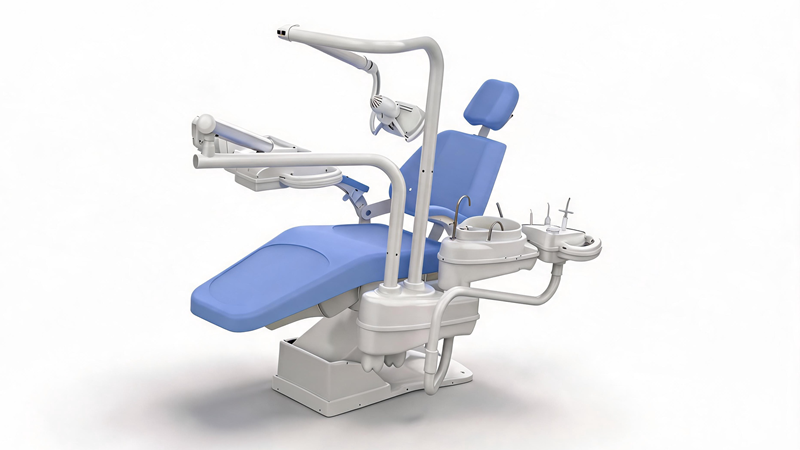
System configuration
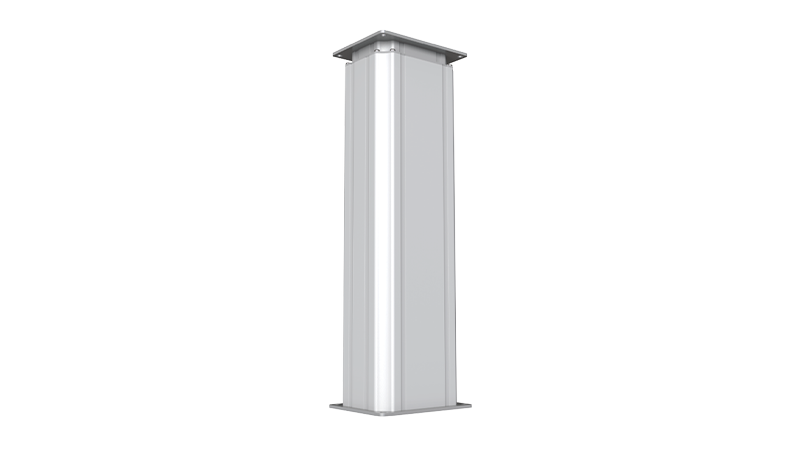
● Lifting column
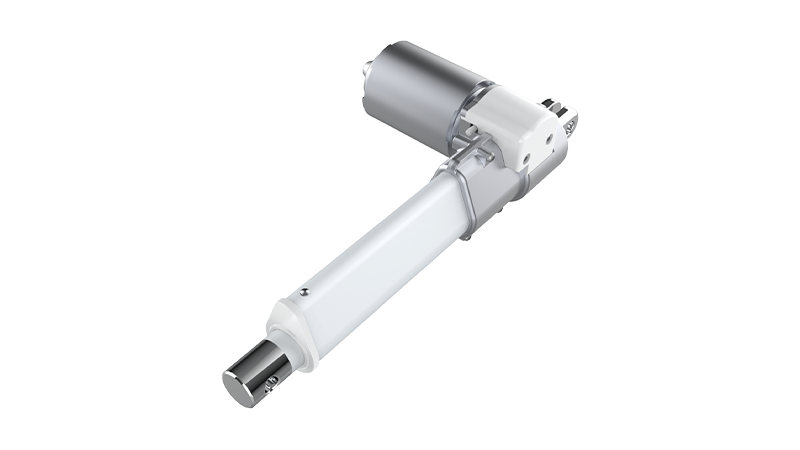
● Linear actuator
● Control box (optional)
● Controls (optional)
Key features and benefits
Precise positioning — the cornerstone of accuracy in ophthalmic examinations
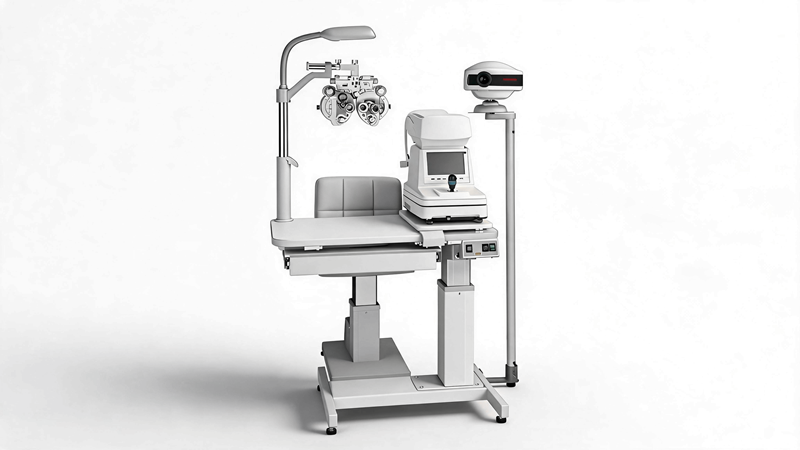
Ophthalmic examinations demand the highest level of positioning accuracy of any medical specialty—the optical axis of the slit lamp must be precisely aligned with the center of the patient's pupil, while the imaging plane of the fundus camera must be precisely in focus with the retina. Our lifting columns and actuator systems provide extremely high repeatability and stepless fine-tuning capabilities. The examination chair can be precisely raised or lowered to the height required for alignment with the optical axis of the examination equipment, while the headrest can be fine-tuned to millimeter precision. Positioning conditions remain identical for every examination, fundamentally ensuring the accuracy and reproducibility of examination data.
Smooth and seamless operation ensures patient comfort and examination safety
Ophthalmic examinations often require a high degree of patient cooperation—keeping the head still, gazing in a specified direction, and remaining motionless. Any wobbling or jerking of the ophthalmic examination table may disrupt the patient's cooperation and affect the smooth progress of the examination. Our lifting columns and actuators provide linear motion that is uniform and jerk-free throughout the entire process. The examination chair's height adjustment is smooth and seamless, allowing patients to undergo precise height adjustments without even realizing it. The fine adjustment of the slit-lamp mount is gentle and accurate, enabling the ophthalmologist to achieve precise alignment of the optical axis with millimeter precision.
Compact design, suited to integrated examination table layouts
Ophthalmic examination tables require the integration of multiple devices—such as slit lamps, refractometers, fundus cameras, and corneal topographers—onto a compact work surface, where internal space is extremely limited. Our lifting columns and actuators are known for their compact design, with short installation lengths and a small footprint, fitting perfectly into the limited space between the examination table's base and support structure. This compact structure provides greater design flexibility for the integration of multiple devices onto the examination table.
Silent operation, creating a quiet examination environment
Ophthalmic examinations often need to be conducted in a quiet, focused atmosphere—patients need to relax to cooperate with the examination, while doctors need to concentrate on performing precise procedures. Our lifting columns and actuators maintain an extremely low noise level during operation. The raising and lowering of the examination chair and the fine-tuning of the support arms are completely silent, ensuring that neither the doctor nor the patient is disturbed.
High protection rating, suitable for medical disinfection environments
Ophthalmic examination tables are situated in medical environments subject to frequent cleaning and disinfection. Our lifting columns and actuators feature a high protection rating, providing full resistance to corrosion from cleaning agents and disinfectants. The use of corrosion-resistant materials and a sealed structural design ensures the equipment operates stably over the long term, even under the stringent demands of a medical environment.
One-touch height adjustment simplifies the operating procedure
During an ophthalmic examination, doctors need to frequently adjust the height of the examination table according to the patient's height and the specific examination being carried out. Our lifting system supports one-touch height adjustment. Doctors need only lightly touch the controls to raise or lower the entire examination chair and instrument table. This simplified operating procedure allows doctors to focus more of their attention on the examination itself, rather than on adjusting the equipment.
Built-in Hall sensors enable precise control for our customers
Our actuators and columns are fitted with built-in Hall sensors, which provide real-time feedback on travel position and operational status via pulse signals. The customer's control system can use this data to precisely monitor the real-time height of the examination chair and the position of the mounting bracket, enabling intelligent functions such as one-touch reset and position memory. The real-time feedback from the Hall sensors provides a reliable positional reference, ensuring consistency in positioning for every examination.
Richmat's engineers provide end-to-end technical support—from requirements analysis and solution design through to product delivery. With our reliable, medical-grade linear drive systems, we safeguard every precise examination and every moment dedicated to preserving sight.